




Discovering Alsace and its Christmas markets at the end of the year: a weekend full of discoveries and treats.
Alsace
Strasbourg and Its Christmas Market
Strasbourg opens this Alsatian weekend. On arrival, on Friday evening, the Christmas atmosphere is already in place: fir trees, cuddly toys and magical decorations. Dinner is at La Casserole (in French), for an incredible meal. The night at the hotel comes quickly. The next day, after breakfast, it is time to explore the city. Despite the grey sky, Strasbourg reveals its beautiful half-timbered houses and its magical Christmas market. Impossible to miss Notre-Dame Cathedral, a 142-metre-high Gothic masterpiece.


Its construction spanned more than four centuries, between 1015 and 1439. Its single spire made it the tallest building in the world for a long time, until 1874. The pink Vosges sandstone façade changes colour throughout the day. Inside, the astronomical clock draws curious visitors every day. Its automatons come to life at 12:30, with the procession of the apostles before Christ. The bravest climb the 332 steps to the platform, 66 metres high. On a clear day, the view stretches over the city’s rooftops, the Black Forest and the Vosges.


The Christkindelsmärik, the Heart of Christmas in Alsace
In the afternoon, the stroll continues among the Christmas market chalets. Nicknamed the “Capital of Christmas”, Strasbourg has hosted the Christkindelsmärik since 1570. Sweets and souvenirs abound, and the first Christmas presents go into the bags. Next stop: the tea room “Au Fond du Jardin”, a real surprise. Exquisite homemade madeleines and a fine selection of teas await. Among them, the “Sherlock Holmes”, a blend with notes of Baileys. After a last walk around town, the day ends at La Casserole.


The name Christkindelsmärik means “market of the Christ Child”. It was born with the Protestant Reformation, which replaced Saint Nicholas with the Christ Child. Today, the market is no longer limited to a single square. More than three hundred chalets are spread throughout the historic centre. Place Broglie hosts the historic market and the largest group of chalets. Around the cathedral, the stalls stretch to Place du Château. Place Kléber gathers decorations and crafts, at the foot of the Great Christmas Tree. This spruce of nearly 30 metres is one of the city’s symbols in December.


Christmas Specialities in Alsace
As for treats, mulled wine flavoured with cinnamon and orange is enjoyed on every street corner. It is served in deposit cups, often decorated and renewed every year. Bredele, small Alsatian Christmas biscuits, are sold by weight or in assortments. Each family has its own recipe, with anise, cinnamon or almonds. Gingerbread, kougelhopf and flammekueche complete the sweet and savoury breaks. Between two chalets, Petite France is worth a detour. Its half-timbered houses line the canals of the Ill, in a postcard setting.


Kaysersberg
France’s Favourite Village
On Sunday, once the hotel keys are returned, it is off to Kaysersberg. The car makes it easy to manage your time as you like. After an hour’s drive, here is this charming village, famous for its Christmas market. Voted France’s Favourite Village in 2017, it is also said to have inspired the animated film Beauty and the Beast.
Nestled at the foot of the Vosges, Kaysersberg keeps many traces of its medieval past. The ruins of its castle overlook the village and the surrounding vineyards. A fortified bridge spans the Weiss, surrounded by brightly coloured half-timbered houses. The village is also the birthplace of Albert Schweitzer, born in 1875. Doctor, theologian and musician, he received the Nobel Peace Prize in 1952. His birthplace now houses a small museum devoted to his life.


Given the crowds, you have to park the car on the heights and take a shuttle to the centre. On arrival, a magical world opens up, between Christmas decorations and Alsatian architecture. It feels like travelling back in time. In an hour, the tour of the village is done. Its authenticity appeals to French visitors and tourists alike.
The Christmas market sets up in the Arsenal courtyard and around the Sainte-Croix church. It claims an authentic approach, with artisans and producers from the region. Candles, wooden objects, pottery and handmade decorations fill the stalls. The market now opens only from Friday to Sunday, during the Advent weekends. Park-and-ride car parks at the entrance to the village are linked to the centre by shuttle. Arriving at opening time, in the morning, lets you enjoy the lanes before the afternoon crowds.


Colmar
The Colmar Christmas Market
Back at the car, a lovely afternoon lies ahead. Next stop: the Colmar Christmas market, just half an hour from Kaysersberg. It would have been a shame to miss it. There, another picture of typical Alsatian architecture awaits visitors. This time, the crowd is much denser and makes the stroll difficult. The atmosphere feels less warm, more “touristy” than in Kaysersberg. Two hours of wandering, a few presents and a hot coffee later, it is already time to head back to Switzerland.


Alsace’s third-largest town, Colmar has several Christmas markets spread across the old town. Place des Dominicains gathers some sixty chalets around its church. Place de l’Ancienne Douane is arranged around the Schwendi fountain, at the foot of the Koïfhus. This late 15th-century building also houses a craft market inside. Place Jeanne-d’Arc showcases local produce, from wines to charcuterie and gingerbread. In Little Venice, the children’s market features a carousel and Santa’s letterbox.


Little Venice, the Postcard of Alsace
Little Venice remains Colmar’s most photogenic district. Its colourful houses are reflected in the Lauch, especially at nightfall. The illuminations then highlight façades, bridges and half-timbering. To avoid the crowds, it is best to choose a weekday or early evening. The Colmar markets stay open a few days after Christmas, unlike Strasbourg’s. A way to extend the magic of the holidays until the end of the year.

Planning Your Weekend in Alsace
From French-speaking Switzerland, Alsace is easy to reach by car or train, via Basel. The train links Basel to Colmar in just under an hour, then continues to Strasbourg. During Advent, a Christmas shuttle also serves Colmar, Kaysersberg, Riquewihr and Ribeauvillé. It avoids parking problems in the villages, often full at weekends. The markets usually open at the end of November, a few days before the first Sunday of Advent. Booking the hotel early is advisable, especially in Strasbourg and Colmar.
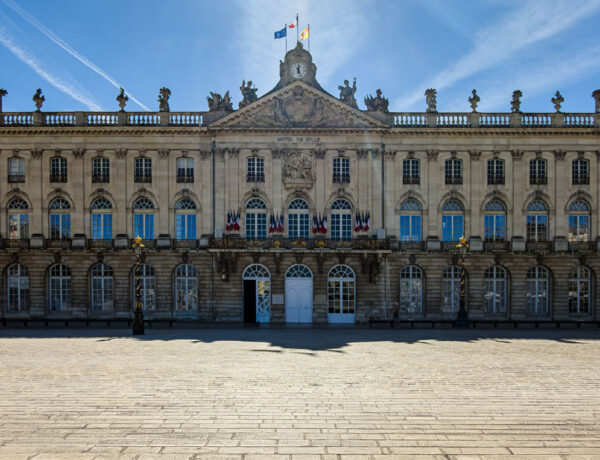
In the Grand Est region, neighbouring Lorraine also has lovely surprises in store. The weekend in Nancy (in French) combines Art Nouveau, gastronomy and wellness.


No Comments